
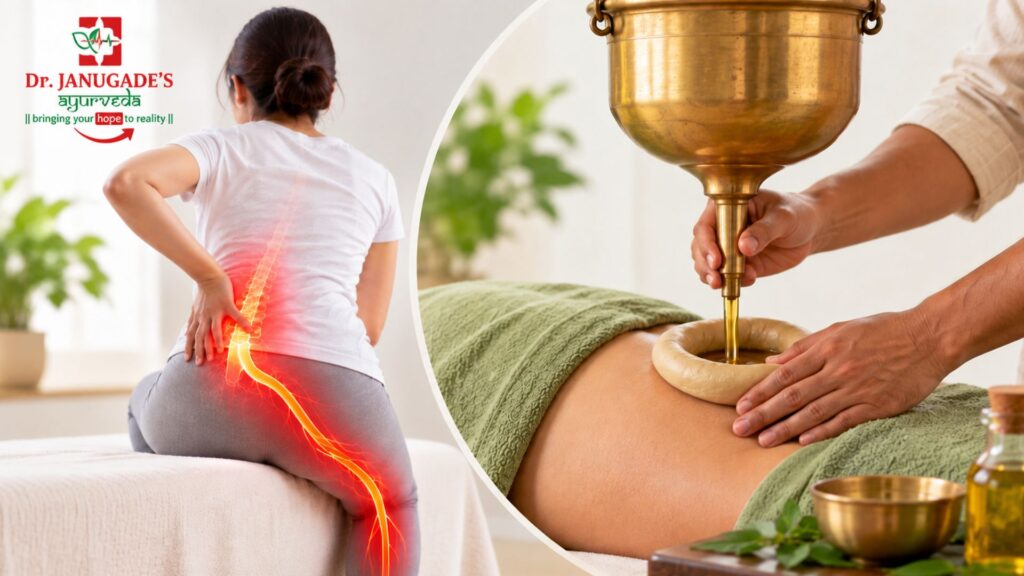
Sciatica may present as pain that radiates down the lower back or buttocks into the leg and can interfere with sitting, walking, sleeping and normal activity. In Sciatica Ayurvedic Treatment in Vashi, the medicines, yoga, Basti, Panchakarma, and lifestyle correction are planned and customized based on the symptoms and health condition of the patient along with the need for treatment.
Sciatica isn’t just about back pain – it can make spending the day sitting at your desk, walking around, or lying down to sleep easy and pleasant a challenge. It’s important to know what could be causing your symptoms, and what treatments you can choose, so you can take steps to care for yourself. Consult Dr. Janugade, Ayurvedic Panchakarma Centre, Vashi on your ailment or the treatment alternatives.
What Is Sciatica and Why Can It Be So Painful?
Sciatica occurs when there is irritation or compression of the sciatic nerve or its nerve roots that causes pain and other feelings down the lower limb.
Typically associated with:
- Radiating pain: Pain is felt in the lower back or buttock and radiates to the thigh, calf or foot.
- Tingling: Pins and needles can be felt along the nerve pathway.
- Numbness: When parts of the leg or foot lose sensation.
- Burning, or shooting pain: Pain that is caused by nerves can feel quite different from regular muscle pain.
- Issues with movement: Moving around in the sitting or standing position may cause discomfort, bending or walking.
- Weakness: When more nerves are involved, a person’s leg may be weaker.
What Causes Sciatica and Who Is at Risk?
The most common causes of Sciatica occur when pressures or irritations are created around the lumbar nerve roots.
Key factors and risk factors include:
- Disease or injury to the nerves: Lead to the irritation of nearby nerve roots.
- Age related degeneration: As the body ages, spaces around spinal nerves can be narrowed.
- Long periods of sitting: Any work done at a desk and sitting for long periods of time puts strain on the lower back.
- Repetitive lifting: Mechanical stress on the spine due to frequent lifting, bending or twisting.
- Poor physical conditioning: Weak supporting muscles that impact on spinal stability and movement.
- Lifestyle factors: Not as active as you would like and being overweight can strain the lower back.
How Is Sciatica Different From Other Types of Back Pain?
Sciatica is identified by its characteristic radiating nerve-related symptoms, while general lower-back pain often remains concentrated around the back.
| Feature | Sciatica | General Lower-Back Pain |
| Pain pattern | Often travels into the leg | Usually remains around the back |
| Tingling | Common | Less typical |
| Numbness | May affect leg or foot | Less typical |
| Weakness | Possible | Depends on the cause |
| Nerve involvement | Characteristic feature | Not always involved |
For example, simple muscular back strain usually produces localized soreness, while sciatica produces a pathway of discomfort extending from the back or buttock toward the leg.
Which Ayurvedic Treatments Can Help Manage Sciatica in Vashi?
Sciatica Ayurvedic Treatment in Vashi combines external therapies, Panchakarma, Ayurvedic medicines, and lifestyle support according to individual treatment requirements.
The commonly used approaches include:
- Abhyanga: Medicated oil massage may support relaxation and flexibility.
- Swedana: Therapeutic heat or steam may help ease stiffness.
- Kati Basti: Warm medicated oil is retained over the lower back.
- Basti: A Panchakarma therapy traditionally used for Vata-related conditions.
- Nasya: Selected medicated preparations are administered through the nasal route.
- Virechana: Therapeutic purgation may be used when clinically appropriate.
- Pichu: Medicated oil-soaked material is applied to the affected area.
- Ayurvedic Medicines: Formulations such as Yogaraja Guggulu, Trayodashanga Guggulu, and Rasnasaptakam Kwatha may be prescribed based on individual needs.
How Does Ayurveda Approach Sciatica?
According to Ayurveda, sciatica is known as Gridhrasi in which Vata has an important role in the Ayurvedic concept of the condition.
The Sciatica Ayurvedic Treatment in Vashi evaluates:
- Where and what the pain is like.
- Rigidity and decreased mobility.
- Tingling and numbness.
- Digestive and lifestyle habits.
- Personal physiology and medical history.
- Length and intensity of symptoms.
This assessment forms the foundation for Sciatica Ayurvedic Treatment in Vashi, with therapies selected according to the individual rather than following a fixed protocol.
The Role of Basti Therapy in Sciatica Ayurvedic Treatment
Sciatica Ayurvedic Treatment in Vashi known as Basti treatment holds an important position in traditional Ayurveda for Vata-related conditions and is specifically used at Dr. Janugade’s clinic for conditions including sciatica and lower-back pain.
The treatment process includes:
- Consultation: Symptoms, health history, and lifestyle are reviewed.
- Preparation: Oil application or fomentation may be advised.
- Basti Administration: Prescribed medicated oil, herbal preparation, or decoction is administered rectally under supervision.
- Observation: The patient is monitored during and after the procedure.
- Post-Treatment Care: Dietary and daily-care guidance is provided.
- Follow-Up: Progress is reviewed and treatment may be adjusted as needed.
What Can a Patient Expect During the First 5–7 Days of Sciatica Treatment?
The first few days of Sciatica Ayurvedic Treatment in Vashi generally focus on assessment, preparation, suitable therapies, and monitoring the patient’s response.
Day-by-Day Treatment Process include:
Day 1 – Initial Consultation
Symptoms, medical history, lifestyle, and pain levels are discussed.
Day 2 – Assessment & Planning
The practitioner evaluates mobility and selects suitable Ayurvedic therapies.
Day 3 – Treatment Begins
Recommended therapies may begin under professional supervision.
Day 4 – Continued Therapy
Treatment continues according to the individual care plan.
Day 5 – Lifestyle Guidance
Advice on diet, posture, movement, rest, and daily habits is provided.
Days 6–7 – Progress Review
Symptoms and treatment responses are reviewed, with adjustments made when needed.
Can Sciatica Be Managed Without Surgery?
Yes, many sciatica cases can be treated conservatively – depending on the cause and severity of the condition in Sciatica Ayurvedic Treatment in Vashi
Non-surgical management includes:
- Physical activity: “Just” get up and move so that you don’t spend too much time sitting.
- Physiotherapy: Exercises targeted to strengthen, stretch and move.
- Posture correction: Sitting and lifting positions to minimize unnecessary strain.
- Pain management: Suitable action taken to ensure that pain does not interfere with daily functioning.
- Lifestyle modification: Recovering with weight management, regular exercise and a healthy lifestyle.
If needed, complementary treatment Ayurveda offers an alternative personalized treatment at Sciatica Ayurvedic Treatment in Vashi
How Can Yoga and Naturopathy Support Sciatica Recovery?
Gentle movement and healthy habits can complement Sciatica Ayurvedic Treatment in Vashi by supporting mobility and comfort.
- Stretches: There may be some gentle stretches for hamstring and piriformis to increase flexibility.
- Yoga: Bhujangasana, Makarasana, Setu Bandhasana and Supta Padangusthasana can help with mobility.
- Relaxation: Promoting relaxation is breathing; Pranayama can promote that.
- Movement breaks: Try to avoid sitting for extended periods of time.
- Posture: Sitting and standing posture.
- Wellness practices: Get regular exercise, eat well and get plenty of sleep.
Why Choose Dr. Janugade Ayurveda for Sciatica Treatment in Vashi?
Dr. Janugade’s Ayurvedic Panchakarma Centre provides Sciatica Ayurvedic Treatment in Vashi with personalized treatment for sciatica and continuous assessment and follow-up.
- Experienced Practitioner: Dr. Archana Janugade, BAMS (Bombay), has 24 years of experience.
- Individual Care: Individualized treatment with respect to health status and needs.
- Panchakarma Therapies: Vaman, Virechan, Basti, Nasya and Raktamokshan.
- Basti Therapy: Personalized according to consultation and evaluation.
- Progress Monitoring: Treatment is monitored and modified as necessary.
- Follow-Up Care: Follow-up guidance enables continued care.
- Hygienic Environment: pay attention to clean and comfortable treatment facilities.
Conclusion
Living with sciatica makes every movement uncomfortable. Treatment will vary based on the cause, severity and individual symptoms. Sciatica Ayurvedic Treatment in Vashi incorporates medicines, yoga and lifestyle modifications, Basti and Panchakarma therapies. Consulting with a trained professional can help you decide if these options are suitable for you.
If you’re dealing with joint pain, back or neck discomfort, skin concerns, hair loss, sinus problems, headaches, PCOD/PCOS, fertility concerns, or other health issues, Dr. Janugade’s Ayurvedic Panchakarma Centre offers personalized care based on your individual needs.
Explore our specialised Ayurvedic treatments and Panchakarma therapies to understand which approach may be suitable for your concerns.
Contact us today to discuss your health needs and explore the right Ayurvedic treatment for you.
FAQ’s
Can Sciatica Ayurvedic Treatment in Vashi Help Manage Pain?
An ayurvedic treatment can be a systematic approach for treating the pain associated with sciatica, customized therapies, medications, lifestyle suggestions and Panchakarma.
How long does Sciatica Ayurvedic Treatment in Vashi take?
The length of treatment will vary depending on the cause of the problem, the severity of the symptoms, the individual’s health, and how the treatment plan is working.
Is Basti useful for sciatica?
Traditionally basti is used in case of vata-related conditions and is a part of the clinic’s ayurvedic treatment for such ailments as Sciatica and lower back pain.
Can Ayurveda and physiotherapy be used together?
In an appropriate coordinated manner, physiotherapy and ayurveda can complement each other and as part of a comprehensive management plan.
When should someone seek medical attention for sciatica?
If the symptoms of sciatica are accompanied by considerable or worsening weakness, severe numbness or bowel or bladder problems, prompt medical evaluation is important.