
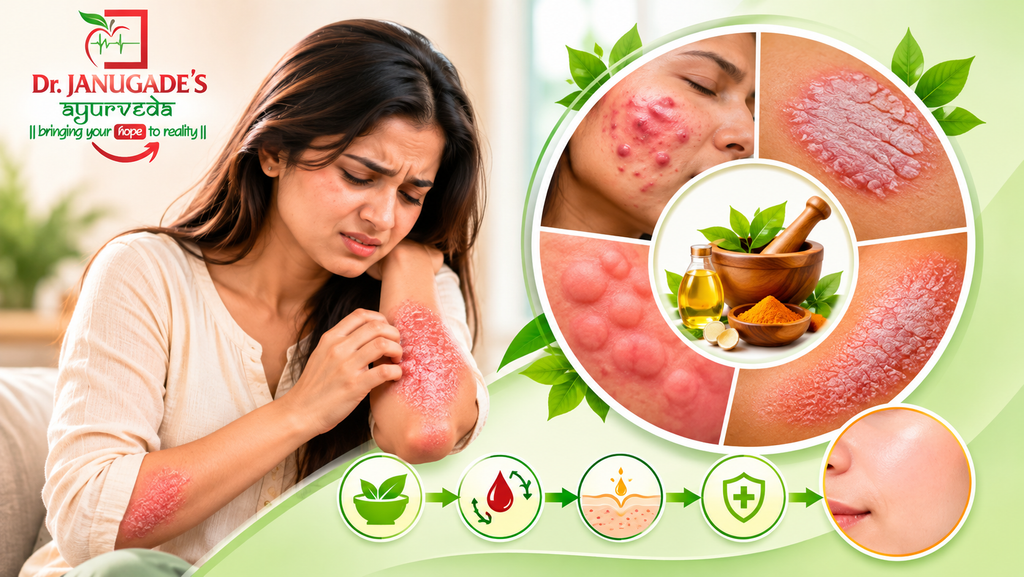
Chronic skin conditions such as eczema, psoriasis, acne, and dermatitis often cause recurring itching, redness, irritation, and discomfort. Ayurvedic treatment for chronic skin diseases follows a traditional approach that considers individual constitution, diet, lifestyle, and overall health. Treatment focuses on understanding the condition and selecting suitable therapies to support skin health and symptom management.
Recurring eczema, psoriasis, acne, pigmentation, dermatitis, urticaria, vitiligo, or fungal skin infections can affect your comfort and confidence. Dr. Janugade’s Ayurveda provides personalized care for these skin concerns through traditional therapies, herbal medicines, and lifestyle guidance. Explore Ayurvedic treatment for chronic skin diseases with an experienced Ayurvedic doctor for chronic skin diseases in Vashi and understand your treatment options.
How Is Ayurveda Related to Chronic Skin Diseases and Internal Health?
Ayurveda views skin health as connected to digestion, nutrition, lifestyle, and the balance of Vata, Pitta, and Kapha. Traditional principles also consider Agni (digestive fire) and Rakta Dhatu (blood tissue) when assessing skin concerns classified under Kushtha. Ayurvedic treatment for chronic skin diseases follows this holistic perspective by considering individual symptoms, constitution, and daily habits. Consulting an Ayurvedic doctor for chronic skin diseases in Vashi helps patients understand suitable traditional care options alongside appropriate medical diagnosis.
What Are the Causes of Chronic Skin Diseases According to Ayurveda?
The skin concerns are evaluated from the Ayurvedic perspective of dosha imbalance, digestion, diet and lifestyle.
The following factors are taken into account when assessing:
- Food practices: Not eating regularly, and eating foods that are not good for their constitution.
- Digestive health: In traditional assessment, the health of Agni is taken into account for digestive health.
- Stress and sleep: Continuous stress and poor sleep can exacerbate some skin symptoms.
- Exposure to the environment: Heat, humidity, pollution, allergens, and irritants can have an impact on the skin.
- Individual constitution: Prakriti and general health history takes care of treatment plans.
From a medical perspective, chronic skin disorders can also involve genetic susceptibility, immune activity, allergies, infections, and environmental triggers. Identifying these factors is important when considering Ayurvedic treatment for chronic skin diseases.
What Are the Common Symptoms of Chronic Skin Disorders?
Chronic skin conditions result in regular changes in the appearance, texture and comfort of the skin.
Common symptoms include:
- Chronic Itching: Constant itching and irritation.
- Redness: swollen and bloody skin spots.
- Dryness: Skin that is dry, rough or flaky.
- Recurring Rashes: Red bumps or irritated patches.
- Pigmentation: Darker or unevenly coloured areas of skin.
- Cracked Skin: painful cracks or soreness.
- Skin Thickening: areas that are rough or hardened.
How Are Chronic Skin Diseases Treated in Ayurveda?
Ayurvedic treatment for chronic skin diseases generally combines individual assessment, selected traditional therapies, herbal preparations, and diet and lifestyle guidance. The treatment plan should reflect the patient’s diagnosis, medical history, symptoms, and suitability for each procedure.
Treatment assessment & procedure are as follows:
Root Cause Assessment
An initial assessment considers symptoms, medical history, dietary habits, lifestyle, and overall health. Ayurvedic practitioners also assess traditional factors such as Prakriti and dosha balance. This helps guide Ayurvedic treatment for chronic skin diseases according to individual needs rather than relying on one remedy for every patient.
Panchakarma Therapy for Chronic Skin Diseases
Panchakarma is a group of traditional Ayurvedic procedures. A procedure is decided on by a qualified practitioner after assessing the health and risk of the patient. Not all skin patients need Panchakarma treatment.
- Virechana (Therapeutic Purgation): It uses the medicines prescribed to clean out the bowels and conventionally balances Pitta under the guidance of the physician.
- Vamana (Therapeutic Emesis):A regulated practice to induce vomiting in particular cases.
- Raktamokshana (Bloodletting or Leech Therapy): Involves the application of a leech to remove blood and must be supervised by trained personnel and be performed in a hygienic manner.
- Basti Therapy: Balancing Vata through medicated oils or herbal liquids given through the rectum. Its two primary types include Anuvasana Basti (oil based) and Niruha Basti (herbal decoction based).
Internal Herbal Medications for Skin Disorders
Selected herbs are traditionally included in Ayurvedic preparations for skin-related concerns. Their role in Ayurvedic treatment for chronic skin diseases depends on the formulation and individual assessment.
- Neem (Nimba): Traditionally used in preparations for skin-related concerns.
- Manjistha: Used in Ayurvedic formulations associated with Rakta-related concepts.
- Medicated Ghee (Ghrita): Included in selected internal or external preparations.
External Ayurvedic Treatments for Skin Disorders
External treatments include selected herbal pastes, oils, and applications. Other traditional therapies include Abhyanga, Swedana, and Udvartana. Their suitability depends on the skin condition and individual tolerance. Broken, infected, or highly irritated skin requires particular care.
Diet and Lifestyle Modifications (Ahara-Vihara)
Ayurveda recommends fresh, balanced meals containing seasonal fruits, green vegetables, whole grains, moong dal, and adequate water to support overall health. Limit excessive fried, processed, and spicy foods if they trigger symptoms. Maintain regular meal timings, get sufficient sleep, manage stress, and avoid irritating skincare products. These habits complement Ayurvedic treatment for chronic skin diseases.
Which Chronic Skin Diseases Can Be Managed Through Ayurveda?
People explore Ayurvedic treatment for chronic skin diseases for several recurring skin concerns. The approach differs by condition and should not replace evidence-based diagnosis or necessary dermatological care.
- Eczema: Causes dry, itchy, inflamed skin that flares up and redness and irritation repeatedly.
- Urticaria: Causes stand-up, itchy welts that can be triggered to appear suddenly.
- Psoriasis: Causes chronic red patches with thick silvery scales.
- Acne: Forms when hair follicles become plugged with blackheads, whiteheads and pimples.
- Contact dermatitis: Makes skin become inflamed when it comes into contact with something that is irritating or causing an allergy, like soap or cosmetics.
- Rosacea: Causes persistent redness, visible blood vessels, and sometimes acne-like bumps, in the face.
Which Ayurvedic Medicines Are Used for Skin Problems?
There are many classical herbal formulations described in Ayurveda which are prescribed based on the symptoms, body type and clinical observations of the individual.
Some commonly referenced formulations include:
- Khadirarishta: It is traditionally used in Ayurvedic skin care for a variety of skin related issues.
- Manjishthadi Kwatha: Herbal Decoction for skin health and traditional Rakta related principles.
- Mahatikta Ghrita: Ghrita (ghee) used in selected skin-treatment protocols, after being mixed with medicinal herbs.
- Haridra Khanda: Formulation made of turmeric and traditionally used for itchy, allergic skin complaints.
- Kaishora Guggulu: Traditional medicine used for some inflammatory and skin-related diseases.
- Nimbadi Churna: It is an Ayurvedic skin care preparation made from neem tree.
Why Consult an Ayurvedic Doctor for Chronic Skin Diseases in Vashi?
Persistent skin problems are a condition that requires individual attention, treatment and consistent care. Dr. Janugade Ayurveda provides classic Ayurvedic methods to address a range of skin issues, guided by customized recommendations.
The clinic’s key highlights include:
- Skin diseases treated: Eczema, Psoriasis, Acne, Urticaria, Dermatitis, Vitiligo, fungal infections, pigmentation, rashes and chronic itching.
- Panchakarma therapies: Abhyanga, Swedana, Shirodhara, Udvartana, and Pizhichil.
- Herbal preparations: Neem, Aloe Vera, Turmeric, Manjistha, Khadira and Guduchi.
- Personalised care: Individual assessment, dietary advice, lifestyle advice and follow up support
If recurring skin concerns affect your comfort and confidence, consult an Ayurvedic doctor for chronic skin diseases in Vashi to explore suitable Ayurvedic treatment for chronic skin diseases.
Conclusion
Recurring skin problems deserve attention, an accurate diagnosis, and a treatment plan suited to the individual. Ayurvedic treatment for chronic skin diseases offers a traditional approach involving assessment, selected therapies, herbal preparations, and lifestyle guidance. If symptoms continue to affect your comfort and confidence, seek an Ayurvedic doctor for chronic skin diseases in Vashi and discuss an appropriate care plan.
If you’re dealing with joint pain, back or neck discomfort, skin concerns, hair loss, sinus problems, headaches, PCOD/PCOS, fertility concerns, or other health issues, Dr. Janugade’s Ayurvedic Panchakarma Centre offers personalized care based on your individual needs.
Explore our specialised Ayurvedic treatments and Panchakarma therapies to understand which approach may be suitable for your concerns.
Contact us today to discuss your health needs and explore the right Ayurvedic treatment for you.
FAQ’s
Can chronic skin diseases be managed with Ayurvedic treatment?
Individual assessment, traditional herbal preparations, selected therapies, and lifestyle guidance are important tools in the treatment of certain skin conditions, using Ayurvedic care.
Which Ayurvedic herbs are commonly used for skin problems?
Ayurvedic skin preparations use Neem, Manjistha and Turmeric, as per individual requirements and suitability.
Does diet affect chronic skin conditions?
Yes, certain foods, allergies, and dietary habits can aggravate skin symptoms in some individuals, making balanced nutrition and trigger identification important.
How do I choose an Ayurvedic doctor for chronic skin diseases in Vashi?
Ask the practitioner about their credentials, experience, method of treatment, safety measures and their ability to arrange for the dermatologist to be part of the treatment.
Is Ayurvedic treatment suitable for every skin disease?
No, suitability depends on the diagnosis, severity, and overall health, and some skin conditions require specific dermatological treatment.