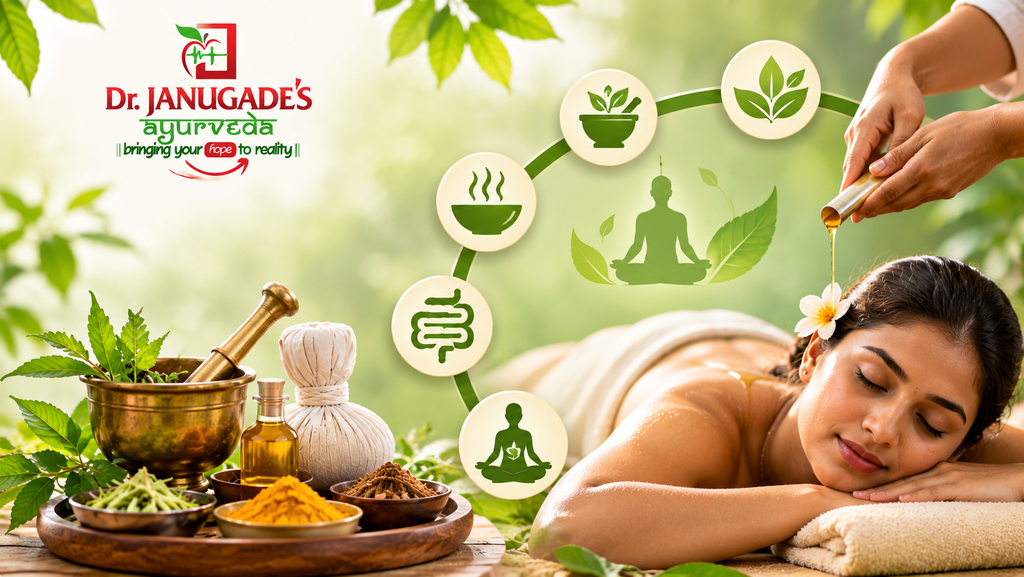
Detoxification Ayurveda therapy follows a traditional approach that combines individual health assessment, preparatory practices, selected Panchakarma procedures and post-treatment care. The process is planned according to a person’s health condition, constitution and treatment suitability.
Confused about which detox procedures suit your health needs? At Dr. Janugade Ayurveda, we provide personalised Panchakarma guidance, supervised therapies and post-treatment care. Connect with us for Ayurvedic Detoxification therapy in Vashi and take the first step towards a guided Ayurvedic wellness journey.
What Is Ayurvedic Detox Therapy?
Ayurvedic detox therapy is a traditional approach that uses dietary guidance, lifestyle adjustments and selected therapies to support health and wellness. It is closely associated with Panchakarma, Ayurveda’s system of five principal procedures. Ayurvedic detox therapy combines traditional cleansing procedures and supportive practices selected according to individual health requirements.
An appropriate Detoxification Ayurveda therapy plan at Dr. Janugade Ayurveda begins with professional assessment rather than following a standard detox package. People exploring Ayurvedic Detoxification therapy in Vashi should understand the purpose, preparation and safety requirements of the recommended procedures.
How Does Ayurvedic Detoxification Work?
Ayurvedic detoxification follows a structured approach involving preparation, selected therapeutic procedures and recovery practices.
The traditional approach focuses on:
- Individual assessment: Understanding health history, constitution and current concerns.
- Dietary guidance: Following suitable food recommendations.
- Preparatory practices: Preparing the body for selected therapies under professional supervision.
- Panchakarma procedures: Choosing appropriate procedures according to the treatment plan.
- Recovery guidance: Following recommended food, rest and lifestyle practices.
The aim of Detoxification Ayurveda therapy is to follow a planned traditional treatment process rather than undertake unsupervised fasting or restrictive cleansing routines.
What Are the Advantages of Ayurvedic Detoxification Therapy?
Ayurvedic detoxification is traditionally used to support wellness through personalised therapies, dietary practices and lifestyle guidance.
Its traditional wellness objectives include:
- Supporting relaxation and general well-being.
- Encouraging structured dietary and lifestyle habits.
- Addressing individual health concerns through selected Ayurvedic therapies.
- Supporting a personalised approach to wellness.
- Providing guidance for post-treatment care and rejuvenation.
A responsible Detoxification Ayurveda therapy programme includes realistic expectations, professional supervision and appropriate safety precautions. At Ayurvedic Detoxification therapy in Vashi, patients should receive clear explanations about the intended benefits and limitations of their treatment.
What Are the Steps Involved in Ayurvedic Detoxification Therapy?
Traditional Ayurvedic detoxification follows three broad stages: preparation, the main therapeutic procedures and recovery. Each stage has a specific role in the treatment plan.
The three phases include:
Phase 1: Purvakarma & Panchkarma (Preparation)
- Virechan: Therapeutic purgation using prescribed preparations under supervision.
- Vaman: Therapeutic emesis prescribed in selected cases by a qualified Ayurvedic physician.
- Basti: Administration of prescribed herbal oils or decoctions through the rectal route.
- Rakta moksha: A traditional bloodletting procedure used only in selected circumstances by appropriately trained practitioners.
- Nasya: Administration of prescribed medicinal substances through the nasal route.
Phase 2: Pradhanakarma (Main Detox)
Pradhanakarma refers to the main therapeutic stage in traditional Panchakarma.
The selected procedure is administered according to the treatment plan. Professional supervision, appropriate preparation and observation are essential throughout this stage. The type of therapy and its duration depend on individual requirements.
Phase 3: Paschatkarma (Recovery and Rejuvenation)
Paschatkarma focuses on recovery and post-treatment care after the main procedures.
This stage generally includes:
- Following a prescribed diet.
- Gradually returning to regular food and activities.
- Maintaining suitable rest and daily routines.
- Following the physician’s lifestyle recommendations.
- Attending follow-up consultations.
At Dr. Janugade Ayurveda, treatment planning includes individualised care, continuous monitoring and follow-up guidance. These stages form the foundation of a supervised Detoxification Ayurveda therapy programme.
Is Ayurvedic Detox Therapy Effective?
Panchakarma is a traditional Ayurvedic approach that aims to support the body’s balance through personalised therapies, dietary guidance and lifestyle practices.
Its traditional benefits include supporting digestive function, promoting relaxation and addressing individual Ayurvedic health concerns. Treatment selection should always consider the patient’s medical history, existing conditions and overall suitability.
At Dr. Janugade Ayurveda, we focus on personalised treatment guidance and appropriate therapy selection based on individual needs.
How Does Panchakarma Compare with Common Detox Diets and Cleanses?
Panchakarma involves specific procedures and preparation, whereas common detox diets generally focus on temporary dietary changes. Neither approach should replace the body’s natural detoxification functions or necessary medical care.
| Comparison | Ayurvedic Panchakarma | Common detox diets |
| Approach | Traditional therapeutic procedures | Dietary restrictions or specific food plans |
| Planning | Individual assessment by an Ayurvedic physician | Often follows a general diet plan |
| Procedures | Selected therapies such as Virechan or Basti | Usually food and beverage changes |
| Supervision | Requires qualified professional supervision | Varies by programme |
| Recovery | Includes prescribed post-treatment guidance | Depends on the diet followed |
Panchakarma involves specific procedures and preparation, whereas common detox diets generally focus on temporary dietary changes.
When comparing Detoxification Ayurveda therapy with commercial cleanses, patients should prioritise safety, medical suitability and evidence-based expectations. A supervised Ayurvedic Detoxification therapy in Vashi begins with consultation rather than an unsupervised cleansing routine.
Who May Consider Ayurvedic Detox Treatment?
Panchakarma is traditionally considered for individuals with specific dosha imbalances and health concerns, following an Ayurvedic assessment.
It may be considered for:
- Dosha Imbalances: Vata, Pitta or Kapha disturbances.
- Digestive Concerns: Issues requiring assessment of Agni (digestive fire).
- Chronic Conditions: Individuals exploring supervised Ayurvedic care.
- Seasonal Wellness: Those considering traditional seasonal therapies.
- Rejuvenation Care: Individuals preparing for selected Ayurvedic rejuvenation programmes.
Pregnancy, acute illness, dehydration, severe weakness and certain medical conditions require particular caution. A qualified Ayurvedic physician should assess suitability before treatment.
What Should You Eat During an Ayurvedic Detoxification Therapy?
In Ayurveda, dietary recommendations during Panchakarma depend on digestive strength (Agni), dosha balance and treatment stage. Easily digestible foods are traditionally introduced according to individual needs.
Common dietary recommendations include:
- Manda: Thin rice gruel, traditionally used during initial dietary recovery.
- Peya: Light rice porridge to support gradual dietary progression.
- Vilepi: Thicker rice preparation introduced as digestion improves.
- Warm, freshly cooked meals: Prepared with suitable ingredients and mild spices.
- Adequate hydration: According to individual needs and physician guidance.
Heavy, oily and processed foods are restricted according to the treatment plan. Fasting and restrictive diets should only be followed under professional guidance.
Begin Your Detox & Wellness Journey With Dr Janugade Ayurveda
Choosing suitable Panchakarma therapy starts with understanding your health concerns. At Dr. Janugade Ayurveda, our approach includes:
- Vaman: Traditional therapeutic emesis.
- Virechan: Traditional purgation therapy.
- Basti: Medicated enema therapy.
- Nasya: Nasal administration of prescribed herbal preparations.
- Raktamokshana: Traditional bloodletting procedure.
- Individual Assessment: Evaluating health and treatment suitability.
- Personalised Care: Selecting appropriate therapies under professional supervision.
- Treatment Guidance: Providing preparation, dietary and aftercare instructions.
Visit Dr. Janugade Ayurveda, a Panchakarma treatment centre in Vashi, to discuss your health concerns and explore suitable treatment options.
Conclusion
Ayurvedic detoxification follows a traditional three-stage approach involving preparation, selected Panchakarma procedures and recovery. Each stage requires appropriate planning, dietary guidance and professional supervision.
If you’re dealing with joint pain, back or neck discomfort, skin concerns, hair loss, sinus problems, headaches, PCOD/PCOS, fertility concerns, or other health issues, Dr. Janugade’s Ayurvedic Panchakarma Centre offers personalized care based on your individual needs.
Explore our specialised Ayurvedic treatments and Panchakarma therapies to understand which approach may be suitable for your concerns.
Contact us today to discuss your health needs and explore the right Ayurvedic treatment for you.
FAQ’s
What is Detoxification Ayurveda therapy?
Detoxification Ayurveda therapy is a traditional Ayurvedic approach that combines dietary guidance, lifestyle practices and selected Panchakarma procedures based on individual health needs.
How does Detoxification Ayurveda therapy work?
Ayurveda therapy follows a planned process involving preparation, selected Panchakarma procedures and post-treatment care, based on an individual’s health assessment.
What are the five Panchakarma procedures used in Detoxification Ayurveda therapy?
The five principal procedures are Vamana, Virechana, Basti, Nasya and Raktamokshana, selected by a qualified Ayurvedic physician according to individual suitability.
How long does Detoxification Ayurveda therapy take?
Detoxification Ayurveda therapy may take different amounts of time depending on the selected procedures, preparation, health condition and recovery plan.
Is Detoxification Ayurveda therapy suitable for everyone?
No, Detoxification Ayurveda therapy is not suitable for everyone; a qualified Ayurvedic physician must assess individual health conditions and treatment suitability before starting.
Where can I receive Detoxification Ayurveda therapy in Vashi?
Dr. Janugade Ayurveda provides Ayurvedic Panchakarma services in Vashi, Navi Mumbai, and patients can contact the clinic to arrange an initial consultation.