
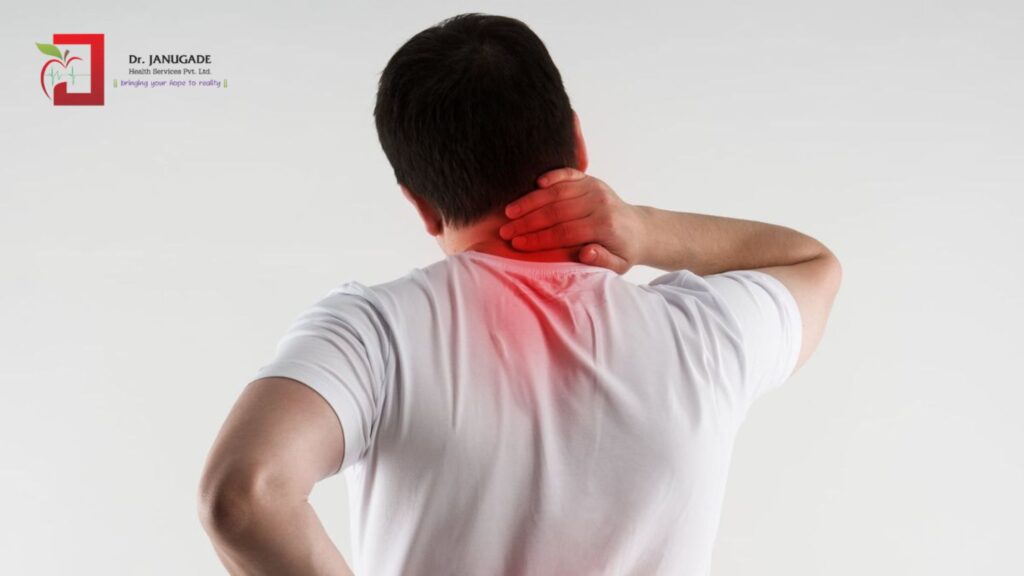
Most people come to an Ayurvedic clinic for spondylosis after years of managing pain, not at the first sign of it. By then, stiffness has become routine, painkillers are part of daily life, and scans have already labelled the spine as “degenerative.” What often surprises patients is this: the degeneration is not the real problem. It is the outcome.
In our experience at Dr. Janugade’s Ayurvedic Panchakarma Treatment Centre, spondylosis rarely begins in the spine. It begins with neglected digestion, chronic stress, poor recovery, and long-term Vata imbalance. Until those factors are addressed, no therapy, modern or traditional, delivers lasting relief.
This is where Ayurvedic understanding of spondylosis becomes not just relevant, but necessary.
How Ayurveda Looks at Spondylosis Differently
Modern medicine explains spondylosis as a form of wear and tear. Ayurveda asks a more uncomfortable question: Why did the wear accelerate in the first place?
According to Ayurveda, the spine is highly sensitive to Vata dosha, which governs movement, nerve conduction, lubrication, and tissue elasticity. When Vata becomes aggravated over the years, the body loses its ability to nourish joints adequately. The result is dryness, stiffness, nerve irritation, and structural degeneration.
This is why two people of the same age can have very different spinal health. One ages with flexibility, the other with pain.
At Dr Janugade’s Ayurvedic Panchakarma Treatment Centre, spondylosis is understood as a progressive systemic imbalance rather than a local mechanical issue. Treating the spine alone misses the real cause.
Symptoms That Signal More Than Just Back or Neck Pain
One of the most common mistakes people make is waiting for pain to become unbearable before seeking help. In reality, spondylosis announces itself much earlier.
Early Indicators We Commonly See
- Morning stiffness that eases slowly
- Neck heaviness or dull lower back ache
- Reduced tolerance for sitting or standing
- Mild tingling that comes and goes
- Recurring headaches starting from the neck
Advanced Symptoms
- Persistent pain radiating to arms or legs
- Numbness or weakness in limbs
- Sleep disruption due to discomfort
- Limited range of spinal movement
These symptoms matter because they reflect progressive tissue dryness and nerve irritation, classic signs of aggravated Vata. Ignoring them accelerates degeneration.
Why Spondylosis Is Increasing at Younger Ages
We have seen patients in their early thirties with spinal degeneration once considered age-related. This is not a coincidence.
Key Contributors
- Prolonged sitting without recovery movement
- Irregular meals and weak digestion
- Excessive mental stress with no physical release
- Overuse of stimulants like caffeine
- Inadequate sleep quality
Ayurveda teaches that digestion is central to tissue health. Poor digestion creates Ama, metabolic waste that blocks nourishment to joints and nerves. Over time, the spine becomes structurally weak despite normal bone density reports.
This is why Spondylosis Ayurvedic treatment always begins by correcting digestion and daily rhythm, not just pain.
Why Painkillers and Physiotherapy Plateau
Painkillers reduce inflammation temporarily. Physiotherapy improves mobility to a point. But many patients notice the same pattern: relief, relapse, repeat.
This happens because:
- Painkillers aggravate digestion over time
- Physiotherapy does not pacify aggravated Vata
- Neither removes metabolic toxins
- Neither restores joint lubrication internally
Without internal correction, external interventions hit a ceiling.
Panchakarma Therapy: Why It Works When Other Approaches Stall
Panchakarma is not a massage protocol. It is a structured biological reset designed specifically for Vata disorders like spondylosis.
At Dr Janugade’s Ayurvedic Panchakarma Treatment Centre, Panchakarma is customised after assessing:
- Dosha dominance
- Digestive strength
- Chronicity of symptoms
- Nervous system involvement

Core Panchakarma Therapies for Spondylosis
Abhyanga
This is not a relaxation massage. Warm medicated oils penetrate tissues, restore lubrication, and calm overstimulated nerves.
Swedana
Herbal steam improves circulation to poorly nourished spinal tissues and relieves deep-seated stiffness.
Basti Therapy
This is the most critical intervention for spondylosis. Basti directly addresses Vata at its primary site, the colon, restoring nerve function and joint nourishment systemically.
Greeva Basti and Kati Basti
Localised oil retention therapies that deliver targeted nourishment where degeneration is most advanced.
In our experience, patients who undergo properly planned Basti therapy achieve better long-term outcomes than those relying solely on localised treatments.
When Panchakarma Should NOT Be Done Immediately
This is rarely discussed, but important.
Panchakarma should be postponed or modified when:
- Digestion is extremely weak
- The body is severely depleted
- There is uncontrolled inflammation or infection
At Dr Janugade’s Ayurvedic Panchakarma Treatment Centre, preparatory therapies are often used before detoxification to ensure the body can respond safely and effectively.
Common Mistakes That Slow Recovery
Expecting Instant Results
Spondylosis develops over the years. Expecting a reversal in days leads to frustration.
Ignoring Diet During Treatment
Panchakarma without dietary discipline weakens results.
Treating Pain Instead of Patterns
Without changing daily posture, stress load, and sleep habits, recurrence is common.
Self-Prescribing Ayurvedic Medicines
Herbs must match the constitution and digestive strength. Otherwise, they aggravate the imbalance.
Diet and Daily Habits That Support Healing
Ayurvedic recovery depends on consistency, not intensity.
What Helps
- Warm, nourishing meals
- Ghee to restore internal lubrication
- Gentle daily movement
- Regular sleep schedule
What Worsens Vata
- Skipping meals
- Excessive cold foods
- Overexertion
- Late nights
These are not lifestyle tips. They are clinical necessities for spinal healing.
Why Patients Choose Dr Janugade’s Ayurvedic Panchakarma Treatment Centre
What distinguishes Dr Janugade’s Ayurvedic Panchakarma Treatment Centre is not the therapies alone, but the clinical reasoning behind them.
Patients receive:
- Individualised diagnosis, not template protocols
- Therapies aligned with classical Ayurveda
- Continuous monitoring during treatment
- Focus on long-term spinal resilience, not symptom suppression
This approach is why patients report sustained relief rather than temporary improvement.
Final Perspective
Spondylosis is not a life sentence. It is a signal that the body’s ability to repair itself has been compromised. Ayurveda does not promise instant cures, but it offers something more valuable: restoration of balance that prevents further degeneration.
When approached correctly, Spondylosis Ayurvedic treatment through Panchakarma becomes not just pain management, but a turning point in overall health.
For those seeking authentic, root-level healing, Dr Janugade’s Ayurvedic Panchakarma Treatment Centre provides a path that aligns treatment with how the body actually heals.