
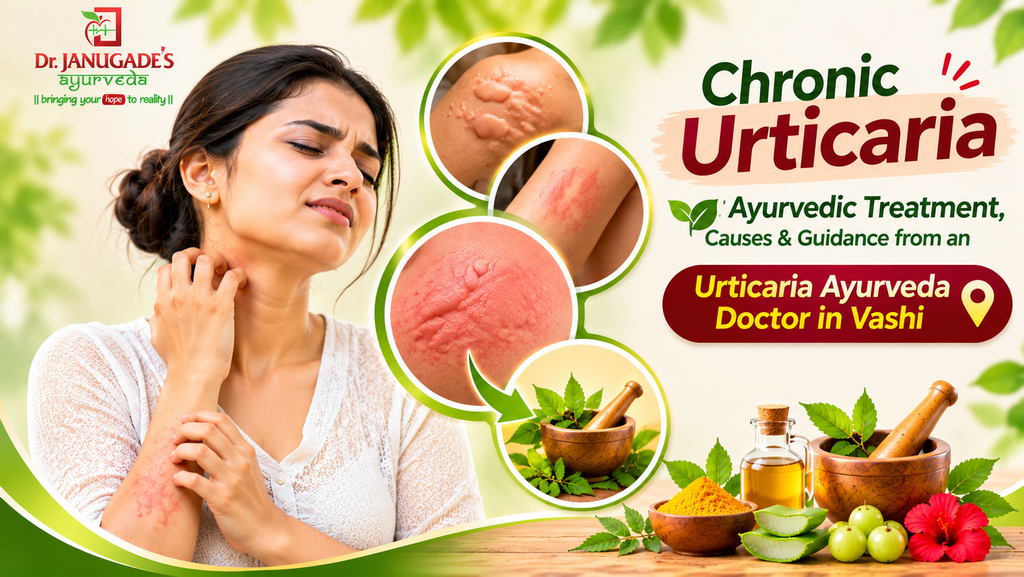
Chronic urticaria causes recurring itchy welts or swelling that continue for more than six weeks. Understanding its symptoms, possible triggers and classification is essential for appropriate care. At Dr Janugade Ayurveda, we believe that a thoughtful consultation, individual health assessment and responsible treatment guidance are important steps towards better skin health.
What Is Chronic Urticaria?
Chronic urticaria is a skin condition characterised by recurring raised, itchy patches called hives or wheals. It is classified as chronic when wheals, swelling or both continue or recur for more than six weeks.
People searching for an Urticaria Ayurveda doctor often have one concern: why does the itching return even after the skin appears normal?
Featured snippet answer: Chronic urticaria is the repeated occurrence of itchy skin welts, with or without deeper swelling, for more than six weeks. Individual wheals generally disappear within 24 hours, although new ones can develop in other areas.
Common symptoms of chronic urticaria
- Raised red or skin-coloured patches.
- Persistent or recurring itching.
- Burning or tingling sensations.
- Swelling around the lips, eyelids, hands or feet.
- Disturbed sleep and discomfort during daily activities.
Deeper swelling is known as angioedema and can last longer than ordinary hives. A clinical assessment helps distinguish urticaria from other skin conditions.
Why Do Allergy Rashes Keep Coming Back?
Recurring itching can be frustrating. You might notice raised patches after sweating, pressure from clothing or exposure to cold. Sometimes, however, symptoms appear without an obvious trigger.
Featured snippet answer: Recurring hives can be associated with chronic spontaneous urticaria or identifiable physical triggers. A symptom diary and medical assessment help establish the pattern and guide appropriate management.
Common triggers and contributing factors
| Possible factor | What to observe |
| Heat and sweating | Flare-ups after exercise or hot showers |
| Pressure or friction | Welts after tight clothing or carrying bags |
| Cold or sunlight | Symptoms following exposure |
| Medicines or infections | Symptoms around an illness or medication change |
| Stress and poor sleep | Changes in symptom intensity |
Stress can aggravate symptoms in some people, but it should not be assumed to be the only cause. Record when the rash appears, how long it lasts, recent medicines and possible exposures.
An Urticaria Ayurveda doctor in Vashi should understand this history before discussing individual care. At Dr Janugade Ayurveda, personalised assessment is an important part of a responsible consultation.
How Ayurveda Understands Chronic Urticaria
Ayurveda describes a symptom pattern resembling urticaria through the traditional concept of Sheetapitta. It is associated with symptoms such as itching, redness, raised patches and skin irritation.
Featured snippet answer: Sheetapitta is a traditional Ayurvedic concept used to understand symptoms resembling urticaria. Ayurvedic assessment considers individual constitution, diet, digestion, lifestyle and overall health.
Sheetapitta and the traditional Ayurvedic perspective
An Ayurvedic practitioner considers the person’s health history, daily routine, dietary habits and individual constitution when discussing care. This approach is different from the biomedical explanation of urticaria, which involves immune cells and inflammatory mediators such as histamine.
If you are consulting an Urticaria Ayurveda doctor in Vashi, share your symptoms, existing diagnosis and current medicines openly. Traditional Ayurvedic guidance should complement—not replace—appropriate medical evaluation.
Classification of Urticaria
Main classifications
- Acute urticaria: Symptoms continue for six weeks or less.
- Chronic spontaneous urticaria: Wheals or swelling recur for more than six weeks without a consistent, specific external trigger.
- Chronic inducible urticaria: Symptoms develop following identifiable triggers such as cold, heat, pressure, sunlight, sweating or water.
For example, someone who develops welts after wearing tight clothing needs a different trigger assessment from someone whose hives appear without a recognisable pattern.
An Urticaria Ayurveda doctor should consider the symptom pattern and relevant medical findings before discussing supportive traditional care.
Ayurvedic Management Strategies for Urticaria
Ayurvedic care begins with understanding the person rather than focusing only on visible skin patches. Dr Janugade Ayurveda’s website describes personalised treatment planning, Panchakarma services and follow-up consultations as part of its broader approach to Ayurvedic care.
Featured snippet answer: An Ayurvedic approach to urticaria involves individual assessment, suitable traditional guidance and attention to diet and lifestyle. Any therapy should be selected by a qualified practitioner after reviewing the person’s health needs.
Personalised assessment and supportive care
An Urticaria Ayurveda doctor in Vashi should review symptom duration, possible triggers, medical history and existing treatment before discussing suitable options.
Practical steps include:
- Maintain a diary of flare-ups and possible triggers.
- Wear comfortable clothing to reduce friction.
- Avoid excessive heat if it consistently worsens symptoms.
- Maintain regular sleep and balanced meals.
- Avoid harsh soaps or skin products that cause irritation.
- Follow prescribed medical treatment and attend recommended reviews.
Dr Janugade’s website also describes individualised Panchakarma planning and follow-up consultations. These services should not automatically be assumed suitable for every person with urticaria; the practitioner must assess suitability first.
Recurring skin symptoms can affect sleep, confidence, work attendance and social activities. A structured consultation helps patients understand their symptoms, discuss realistic care options and plan appropriate follow-up instead of repeatedly trying unverified remedies.
Which Ayurvedic Medicines Are Used for Urticaria Treatment?
There is no single Ayurvedic medicine suitable for everyone with urticaria. Formulations and therapies discussed in traditional practice depend on individual assessment, health history and existing medication.
Featured snippet answer: Ayurvedic medicines for urticaria should be selected only after consultation with a qualified practitioner. Ingredients, suitability, precautions and possible interactions need to be reviewed before use.
An Urticaria Ayurveda doctor in Vashi should explain the purpose of any recommended preparation and the follow-up plan. Do not self-prescribe herbal products or assume that a natural product is automatically safe.
Common mistakes to avoid
- Assuming every recurring rash is caused by food.
- Starting multiple herbal products without professional advice.
- Stopping prescribed allergy medicines independently.
- Ignoring repeated swelling or worsening symptoms.
- Expecting an instant or guaranteed cure.
Important: Swelling of the tongue or throat, difficulty breathing, dizziness or fainting requires emergency medical attention. Do not wait for an Ayurvedic appointment if these symptoms occur.
Conclusion
Recurring hives, itching and skin irritation can affect your sleep, confidence and everyday comfort. Understanding your symptoms and identifying possible triggers are important steps towards better skin management. At Dr Janugade Ayurveda, we encourage personalised consultation and responsible Ayurvedic guidance based on your individual health needs. If you are looking for an Urticaria Ayurveda doctor in Vashi, connect with Dr Janugade Ayurveda to discuss your concerns and explore suitable care options with professional guidance.
If you’re dealing with joint pain, back or neck discomfort, skin concerns, hair loss, sinus problems, headaches, PCOD/PCOS, fertility concerns, or other health issues, Dr. Janugade’s Ayurvedic Panchakarma Centre offers personalized care based on your individual needs.
Explore our specialised Ayurvedic treatments and Panchakarma therapies to understand which approach may be suitable for your concerns.
Contact us today to discuss your health needs and explore the right Ayurvedic treatment for you.
FAQ’s
1. What is the main cause of chronic urticaria?
Chronic urticaria is often associated with immune system activity, and many cases have no single identifiable trigger.
2. How long does chronic urticaria last?
Chronic urticaria is defined by recurring hives or swelling that continue for more than six weeks.
3. Can stress trigger recurring urticaria?
Stress can aggravate itching and flare-ups in some individuals, although it is not the only cause.
4. What is Sheetapitta in Ayurveda?
Sheetapitta is a traditional Ayurvedic concept associated with symptoms resembling urticaria, including itching, redness and raised skin patches.
5. Which doctor should I consult for chronic urticaria in Vashi?
Consult a qualified dermatologist or physician for diagnosis, and discuss complementary Ayurvedic guidance with Dr Janugade Ayurveda in Vashi.