
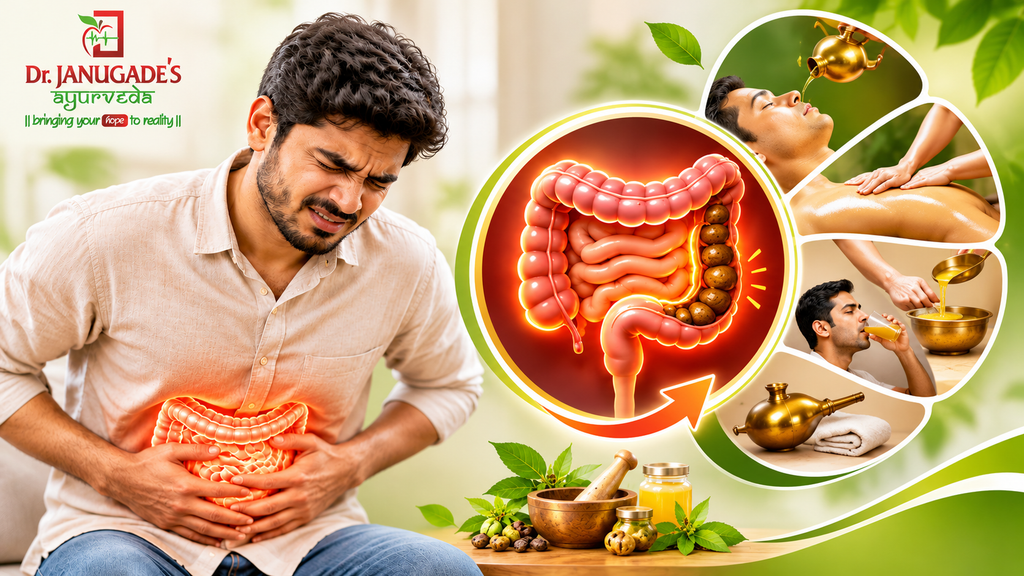
Constipation is more than having fewer bowel movements. Hard stools, straining and incomplete bowel emptying can cause discomfort and interfere with daily activities. When left untreated, persistent constipation can contribute to haemorrhoids, anal fissures and faecal impaction. Ayurvedic treatment for constipation follows a traditional approach involving digestive health, dietary habits and individualised care.
What Is Constipation, and When Does It Become a Concern?
Constipation refers to infrequent bowel movements, hard or dry stools, difficulty passing stool or a feeling of incomplete evacuation. Having fewer than three bowel movements per week is a common indicator, but changes in your usual bowel pattern and excessive straining also matter.
Occasional constipation can occur due to dietary changes, inadequate fluid intake, reduced physical activity or changes in routine. It becomes a concern when symptoms persist, repeatedly return or interfere with everyday comfort. Ayurvedic treatment for constipation considers traditional digestive-health factors, but persistent symptoms also require medical evaluation to identify their cause.
What Happens to Your Digestive System and Body When Constipation Is Ignored?
When constipation continues, stool remains in the colon longer and becomes harder to pass. Repeated straining increases pressure around the anus and pelvic floor, while prolonged stool retention can lead to complications.
Key effects include:
- Anorectal complications: Repeated straining and hard stools can cause haemorrhoids and anal fissures, leading to pain and bleeding.
- Severe bowel blockages: Severe constipation can contribute to faecal impaction or bowel obstruction, causing pain, vomiting and difficulty passing stool or gas.
- Pelvic floor strain: Repeated straining can affect pelvic floor muscle coordination and make bowel movements difficult.
- Systemic effects and Ayurvedic perspective: Persistent constipation can affect appetite, sleep and daily comfort. Ayurveda explains digestion through traditional concepts such as Agni and Vata.
- Fecal impaction: Hardened stool becomes trapped in the rectum or colon, causing abdominal pain, bloating and rectal pressure.
- Abdominal distension and pain: Stool retention can cause abdominal swelling, cramps and bloating.
Which Symptoms Can Indicate Severe Constipation?
Severe constipation can cause symptoms that interfere with normal bowel movements and daily comfort. Recognising these warning signs helps determine when medical attention is necessary.
Watch for the following symptoms:
- Persistent difficulty passing stool or excessive straining.
- Hard, dry stools and incomplete bowel emptying.
- Severe or worsening abdominal pain.
- Abdominal swelling and persistent bloating.
- Vomiting or inability to pass gas.
- Blood in the stool or unexplained weight loss.
- A sudden and persistent change in bowel habits.
Seek urgent medical care for severe abdominal pain, repeated vomiting, significant abdominal swelling or inability to pass stool and gas. Do not rely on home remedies or Ayurvedic treatment for constipation when symptoms suggest a possible obstruction or another urgent condition.
How Does Ayurveda Understand Digestive Health and Constipation?
Ayurveda views constipation through digestive function (Agni), dosha balance and daily habits. It commonly associates constipation with Vata imbalance, which is traditionally linked to dryness, hard stools and irregular bowel movements. This approach considers digestion and elimination together.
Agni (Digestive Fire)
Agni represents the body’s digestive and metabolic processes in Ayurvedic philosophy. Ayurveda describes four types:
- Sama Agni: Balanced digestion and regular digestive function.
- Tikshna Agni: Intense digestion, traditionally associated with excessive digestive activity.
- Manda Agni: Sluggish digestion, traditionally associated with slow digestive activity.
- Vishama Agni: Irregular digestion, associated with inconsistent digestive patterns.
These classifications help guide traditional dietary and lifestyle recommendations. Ayurvedic treatment for constipation considers Agni alongside appetite, bowel habits and individual health.
Dosha Imbalance: Vata Dosha, Pitta Dosha and Kapha Dosha
Ayurveda describes three doshas that influence different bodily functions:
- Vata Dosha: Governs movement and elimination. Its imbalance is traditionally associated with dryness, hard stools and irregular bowel movements.
- Pitta Dosha: Governs heat and transformation. Its imbalance is traditionally associated with digestive heat and irritation.
- Kapha Dosha: Represents stability and structure. Its imbalance is traditionally associated with heaviness and sluggishness.
Dryness and Coldness
Dryness and coldness are traditional qualities associated with aggravated Vata. Ayurveda considers these qualities when recommending food habits and daily routines. From a medical perspective, hard stools are also linked to inadequate fluid intake, insufficient fibre, inactivity and certain medicines.
Root-Cause Approach
Ayurveda considers digestion, dietary habits, bowel routines, stress and dosha balance when planning care. Constipation Ayurveda doctors in vashi can assess individual symptoms and discuss suitable traditional options alongside appropriate medical evaluation.
How Does Ayurveda Approach Constipation Treatment?
Ayurvedic treatment for constipation focuses on supporting regular bowel movements through dietary changes, daily routines, herbal preparations and selected traditional therapies. The approach considers individual symptoms, health history and digestive patterns.
Vata Management
Ayurveda associates Vata imbalance with dryness, hard stools and irregular bowel movements. Traditional recommendations focus on regular meals, suitable food choices and consistent daily habits.
Hydration
Adequate water intake helps soften stools and support bowel movements. Fluid needs vary according to health and activity levels. Follow medical advice if you have fluid restrictions.
Managing Stress and Emotional Imbalances
Stress can affect bowel habits through the gut-brain connection. Relaxation, adequate sleep, mindful breathing and regular routines support digestive health.
Ayurvedic Concepts of Digestion and Elimination
Ayurveda considers Agni, dosha balance and regular elimination when planning digestive care. These traditional concepts guide dietary and lifestyle recommendations.
Ayurvedic Herbs and Remedies for Constipation Relief
Traditional formulations include herbs used to support bowel movements. Their selection and dosage require professional guidance because some preparations cause side effects or interact with medicines. Constipation Ayurveda doctors in vashi can review suitable options.
Yoga and Pranayama for Constipation Management
Walking, gentle yoga stretches and breathing exercises support physical activity, relaxation and regular bowel habits. They do not replace medical treatment for severe constipation.
Lifestyle and Daily Routine (Dinacharya)
Dinacharya promotes consistent daily habits that support digestion and elimination:
- Eat fibre-rich foods, including fruits, vegetables and whole grains.
- Drink adequate water.
- Stay physically active.
- Avoid delaying bowel movements.
- Maintain a regular meal and sleep schedules.
Ayurvedic treatment for constipation incorporates these habits into an individualised traditional care approach.
Which Panchakarma Treatments Support Digestive Regularity?
Panchakarma refers to traditional Ayurvedic procedures used for different health purposes. Each procedure requires an individual suitability assessment and qualified supervision. Constipation Ayurveda doctors in vashi should explain the purpose, precautions and risks before recommending any procedure.
Basti
Basti involves administering prescribed oils or herbal preparations through the rectum. Traditionally associated with Vata management, it is used in Ayurvedic constipation care.
Virechana
Virechana is a supervised purgation procedure traditionally associated with Pitta management. It requires professional guidance because it can cause dehydration and electrolyte disturbances.
Abhyanga
Abhyanga is a traditional oil massage used for relaxation and general wellness. It is not a direct constipation treatment.
Snehapana
Snehapana involves supervised oral intake of prescribed ghee or oils. It serves as a preparatory procedure in selected Panchakarma protocols.
Vamana
Vamana is a supervised therapeutic vomiting procedure traditionally associated with Kapha management. It is not a direct treatment for constipation.
Nasya
Nasya involves administering prescribed oils or preparations through the nostrils. It is traditionally used for nasal and head-related concerns.
Herbal Steam Therapy
Herbal steam therapy is a traditional external procedure used for relaxation. It does not directly relieve constipation. Avoid hot-water methods that risk burns.
Shirodhara
Shirodhara involves pouring a steady stream of liquid over the forehead. It is traditionally used for relaxation and is not a direct constipation treatment.
Ayurvedic treatment for constipation should be individualised. Consult Constipation Ayurveda doctors in vashi to understand the purpose, suitability and risks of each procedure.
When Should You Seek Medical Help for Persistent Constipation?
Persistent constipation, hard stools and repeated straining require proper assessment. At Dr. Janugade’s Ayurveda in Vashi, Navi Mumbai, the approach to digestive care includes:
- Personalised consultation: Assessment of symptoms and health history.
- Basti therapy: Traditional Ayurvedic procedure associated with constipation management.
- Virechana: Supervised traditional cleansing procedure.
- Herbal preparations: Selected according to individual needs.
- Diet and lifestyle guidance: Recommendations for digestive health and regular bowel habits.
- Follow-up care: Monitoring symptoms and treatment response.
Consult Constipation Ayurveda doctors in vashi at Dr. Janugade’s Ayurveda to discuss suitable care options. Ayurvedic treatment for constipation should complement appropriate medical care.
Conclusion
Ignoring persistent constipation can lead to painful straining, haemorrhoids, anal fissures and, in some cases, faecal impaction. Recognising warning signs and addressing contributing factors early helps prevent complications. Ayurvedic treatment for constipation follows a traditional approach involving dietary habits, daily routines and selected therapies. Consult a qualified healthcare professional to understand the cause of persistent symptoms and discuss safe complementary care.
If you’re dealing with joint pain, back or neck discomfort, skin concerns, hair loss, sinus problems, headaches, PCOD/PCOS, fertility concerns, or other health issues, Dr. Janugade’s Ayurvedic Panchakarma Centre offers personalized care based on your individual needs.
Explore our specialised Ayurvedic treatments and Panchakarma therapies to understand which approach may be suitable for your concerns.
Contact us today to discuss your health needs and explore the right Ayurvedic treatment for you.
FAQ’s
What is the best Ayurvedic treatment for constipation?
Ayurvedic treatment for constipation traditionally includes Basti, selected herbal preparations and dietary changes based on individual assessment.
Can Ayurvedic treatment relieve chronic constipation?
Ayurvedic treatment for constipation focuses on traditional therapies, diet and lifestyle changes alongside appropriate medical care.
Which Ayurvedic herbs help with constipation?
Triphala and other traditional herbal preparations are used in Ayurveda to support bowel regularity, with dosage guided by a practitioner.
How can I prepare for a constipation consultation in Vashi?
Note your bowel habits, symptoms, diet and fluid intake, and carry your current medicine and supplement list when consulting Constipation Ayurveda doctors in vashi.
How long does Ayurvedic treatment for constipation take?
Treatment duration depends on symptom severity, underlying causes, individual health and the recommended care plan.