
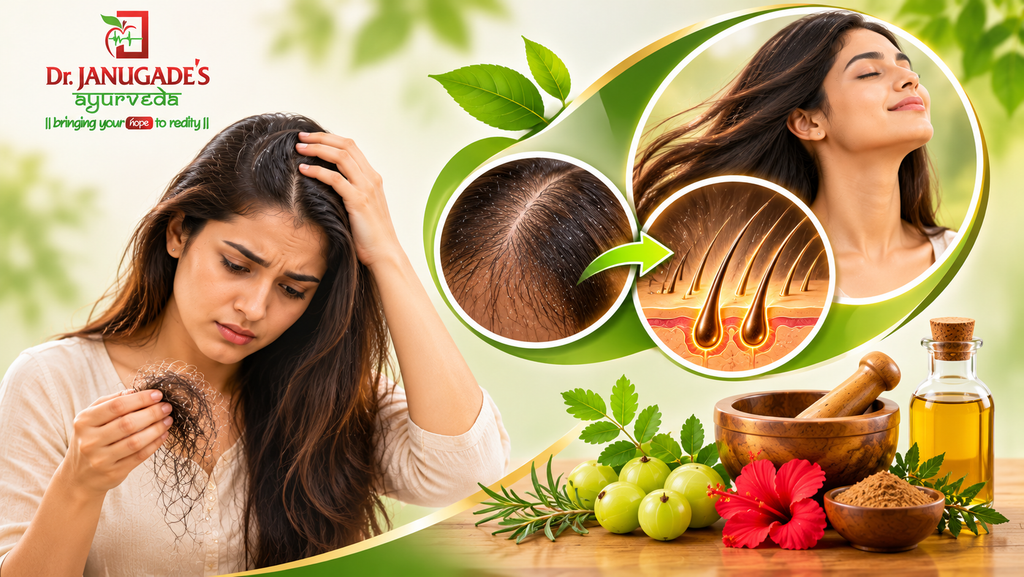
Hair fall that stops and starts again often indicates that the factors affecting hair growth have not been fully addressed. From nutritional gaps and hormonal changes to stress and scalp problems, several issues can contribute to repeated shedding. Ayurvedic treatment for recurring hair fall focuses on understanding these contributing factors and developing a personalised approach to hair and scalp care.
What Are the Different Types of Hair Fall?
Hair loss does not have one universal pattern. Identifying the type helps distinguish temporary shedding from conditions that require specific medical treatment. An appropriate plan for Ayurvedic treatment for recurring hair fall begins with understanding the nature, duration and distribution of hair loss.
Common types include:
- Telogen effluvium: Increased shedding that often follows physical illness, emotional stress, surgery, childbirth or nutritional deficiencies.
- Androgenetic alopecia: Hereditary hair thinning that typically develops gradually, often around the crown, hairline or central parting.
- Alopecia areata: An autoimmune condition that causes distinct patches of hair loss.
- Anagen effluvium: Rapid hair loss caused by damage to actively growing hair, sometimes associated with chemotherapy or certain toxic exposures.
Temporary shedding and progressive thinning are not the same. Persistent, patchy or sudden hair loss deserves medical assessment before choosing a treatment.
Why Does Hair Fall Keep Coming Back?
Hair fall recurs when triggers remain active. Temporary improvement does not always mean the cause is resolved. Ayurvedic treatment for recurring hair fall starts with reviewing health, scalp and lifestyle. Hair fall Ayurveda doctors in vashi assess the pattern.
Unbalanced Doshas (Pitta, Vata and Kapha)
Ayurveda considers Pitta, Vata and Kapha in traditional hair assessment. These are not medically established causes of hair loss.
Pitta Dosha (Excess Heat)
Pitta is traditionally linked with heat and irritation. Persistent scalp redness needs medical attention.
Vata Dosha (Dryness and Air)
Vata is associated with dryness and brittle hair. Heat styling and harsh treatments also cause breakage.
Kapha Dosha (Excess Oil and Toxins)
Kapha is traditionally linked with heaviness and oiliness. Dandruff and itching require scalp assessment.
Poor Digestion and Ama Accumulation
Ama is an Ayurvedic concept, not a measurable toxin. Nutritional deficiencies also affect hair health.
Unaddressed Lifestyle and Stress Triggers
Stress, illness, poor sleep, restrictive diets and rapid weight loss can trigger shedding, sometimes weeks after a fever.
Unresolved Root Causes
Genetics, thyroid disorders, hormonal changes, deficiencies, autoimmune conditions and medications contribute to hair loss. Ayurvedic treatment for recurring hair fall should not delay diagnosis.
Scalp and Hair Follicle Inflammation
Dandruff, fungal infections and psoriasis affect scalp health. Persistent itching, redness, pain or patchy loss needs medical evaluation.
Temporary Solutions vs. Long-Term Hair Fall Management
Shampoos, oils and supplements alone cannot address every cause. Ayurvedic treatment for recurring hair fall should focus on identifying triggers, correcting deficiencies and monitoring progress. Genetic and autoimmune hair loss requires specific medical care.
How Does Ayurveda Approach Recurring Hair Fall?
Ayurveda traditionally approaches hair concerns through individual assessment, dietary guidance, lifestyle changes and selected internal or external therapies.
Nidana Parivarjana (Removing the Root Cause)
Nidana Parivarjana focuses on identifying and avoiding contributing factors such as stress, poor sleep, restrictive diets and unsuitable hair-care habits. For example, shedding after dieting requires nutritional assessment and dietary correction, not just hair oil.
Deepana and Pachana (Supporting Digestion)
These traditional Ayurvedic approaches aim to support digestion. They should complement, not replace, checks for nutritional deficiencies, thyroid disorders or other medical causes.
Internal Correction (Shamana and Shodhana)
Shamana focuses on traditional balancing approaches, while Shodhana involves Ayurvedic purification procedures. Both require professional assessment. Ayurvedic treatment for recurring hair fall should avoid unsupervised herbs, restrictive diets and cleansing procedures.
External Care (Shiro Abhyanga and Lepa)
Shiro Abhyanga involves oil-based head massage, while Lepa uses herbal pastes. These practices support traditional scalp care but are not proven to reverse hereditary hair loss. Avoid products that cause irritation.
Targeted Herbs and Internal Nourishment
Bhringaraj, Amla and Fenugreek are traditionally used in Ayurvedic hair care. Herbal preparations vary in quality and concentration, so internal supplements require professional guidance, especially when taking medication.
Dietary and Lifestyle Realignment (Ahara-Vihara)
Healthy routines support overall hair health. Key habits include:
- Eat adequate protein and iron-rich foods.
- Maintain regular meals and sufficient sleep.
- Manage stress through exercise and relaxation.
- Avoid tight hairstyles, excessive heat and harsh chemicals.
- Follow a scalp-care routine suited to your hair type.
These habits support hair health but do not replace treatment for underlying medical conditions.
What Is Nasya in Ayurveda for Hair Loss?
Nasya is a traditional Ayurvedic procedure involving the administration of selected substances through the nasal route. It is used in certain Ayurvedic treatment frameworks for conditions involving the head and neck.
However, there is insufficient strong clinical evidence to establish Nasya as a direct treatment for hair regrowth. It should not be presented as a proven way to reverse hair loss. Anyone considering the procedure should first discuss its suitability, risks and alternatives with a qualified practitioner.
How Does Ayurveda Diagnose the Causes of Hair Fall?
An Ayurvedic consultation considers symptoms, health history, digestion, lifestyle and traditional dosha assessment, while also checking for possible medical causes.
The assessment may include:
- When shedding began and whether it is continuous or episodic.
- Whether hair is thinning across the scalp or falling in patches.
- Recent illness, stress, childbirth, weight changes or dietary restrictions.
- Family history of hair loss.
- Current medicines, supplements and hair-care practices.
- Scalp symptoms such as itching, scaling, redness or pain.
Depending on the findings, blood tests or a scalp examination may help identify iron deficiency, thyroid disorders and other underlying causes.
Ayurveda vs. Allopathy: Which Approach Is Suitable for Hair Fall?
The suitable approach depends on the diagnosis, severity and progression of hair loss. Conventional medicine offers established investigations and condition-specific treatments, while Ayurveda provides traditional frameworks for personalised lifestyle and supportive care.
| Aspect | Ayurveda | Conventional medical care |
| Assessment | Traditional dosha and lifestyle assessment | Clinical history, scalp examination and relevant tests |
| Main focus | Individualised diet, routine and traditional therapies | Identifying and treating the medical cause |
| Hair oils | Used for conditioning and traditional external care | May be recommended for hair conditioning, depending on need |
| Medicines | Selected herbal preparations under supervision | Evidence-based medicines for specific diagnoses |
| Best role | Supportive care where appropriate | Diagnosis and treatment of recognised hair-loss conditions |
Ayurvedic treatment for recurring hair fall can be considered alongside appropriate medical care when the plan is safe, transparent and suitable for the diagnosis.
What Is the Role of Ayurvedic Oils in Hair Care?
Ayurvedic oils are traditionally used to condition hair, massage the scalp and support a regular hair-care routine. Preparations may contain ingredients such as Bhringaraj, Amla or Neem.
Oils can reduce dryness and improve hair manageability, but they do not reliably reverse genetic hair loss or treat every cause of shedding. Choose products that suit your scalp and stop using them if irritation develops.
How Often Should You Use Ayurvedic Hair Oils?
Oil frequency depends on scalp type, hair texture and product formulation. A gentle routine is more useful than applying large amounts frequently.
- Apply a suitable amount without vigorous rubbing.
- Avoid leaving oil on an irritated or inflamed scalp.
- Wash it out if it causes itching or discomfort.
- Do not assume that more frequent oiling produces faster growth.
Why Choose Dr. Janugade’s Ayurveda for Hair Fall Treatment?
Dr. Janugade’s Ayurveda offers personalized hair-loss care through traditional therapies, herbal preparations and lifestyle guidance based on individual needs.
Key highlights include:
- Personalised Consultation: Assessment of hair concerns and health history.
- Panchakarma: Traditional therapies based on individual needs.
- Shirodhara and Nasya: Traditional Ayurvedic procedures.
- Herbal Hair Care: Preparations featuring Bhringaraj, Amla and Neem.
- Root-Cause Assessment: Consideration of stress, nutrition, hormonal changes and scalp health.
- Diet and Lifestyle Guidance: Advice on nutrition, sleep, hydration and stress management.
- Follow-Up Care: Progress reviews and personalised recommendations.
- Multiple Hair Concerns: Guidance for thinning, recurring shedding and premature greying.
Those exploring Ayurvedic treatment for recurring hair fall can discuss suitable options and expectations during a consultation with the clinic.
Conclusion
Managing recurring hair fall starts with identifying its underlying cause. Ayurvedic treatment for recurring hair fall may include traditional therapies, dietary changes and lifestyle guidance. For persistent or sudden shedding, medical evaluation remains important. Hair fall Ayurveda doctors in vashi can help you understand suitable traditional care options alongside medical guidance.
If you’re dealing with joint pain, back or neck discomfort, skin concerns, hair loss, sinus problems, headaches, PCOD/PCOS, fertility concerns, or other health issues, Dr. Janugade’s Ayurvedic Panchakarma Centre offers personalized care based on your individual needs.
Explore our specialised Ayurvedic treatments and Panchakarma therapies to understand which approach may be suitable for your concerns.
Contact us today to discuss your health needs and explore the right Ayurvedic treatment for you.
FAQ’s
What causes recurring hair fall?
Recurring hair fall is commonly linked to stress, nutritional deficiencies, hormonal changes, genetics and scalp conditions.
How does Ayurvedic treatment help with recurring hair fall?
Ayurvedic treatment for recurring hair fall focuses on personalised assessment, traditional therapies, herbal care and lifestyle guidance.
Which Ayurvedic herbs are used for hair fall?
Bhringaraj, Amla and Fenugreek are traditionally used in Ayurvedic hair-care preparations.
Does Ayurveda offer treatment for long-term hair fall?
Ayurveda offers traditional therapies and lifestyle recommendations tailored to individual hair concerns, alongside appropriate medical evaluation.
Where can I find hair fall Ayurveda doctors in Vashi?
Hair fall Ayurveda doctors in vashi at Dr. Janugade’s Ayurveda provides personalized consultations and guidance on suitable Ayurvedic treatment for recurring hair fall.