
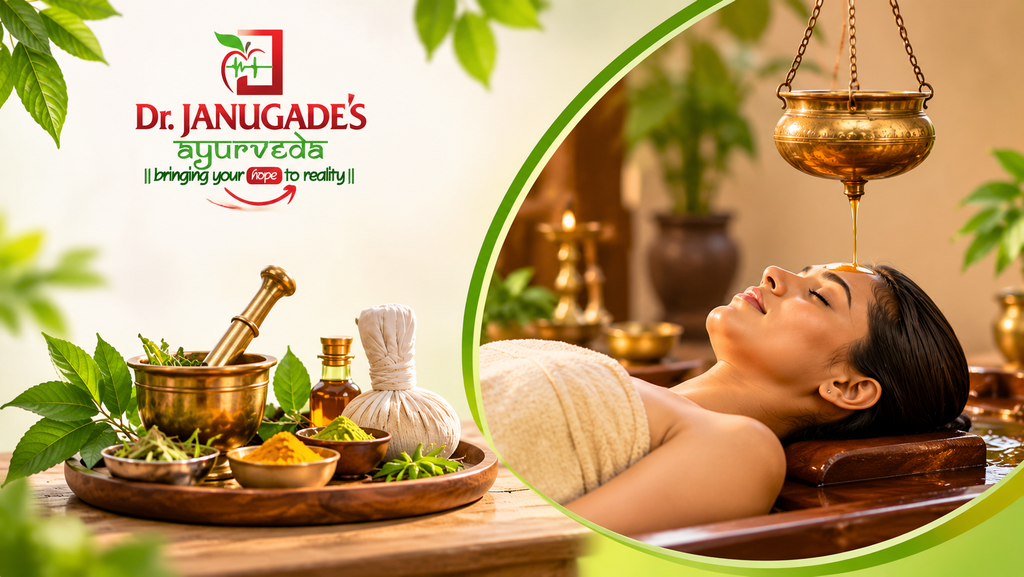
Panchakarma treatment planning begins with an individual health assessment rather than selecting procedures from a fixed package. An Ayurvedic physician considers the patient’s health history, symptoms, constitution, current condition and treatment suitability before recommending therapies. This personalized approach determines the appropriate procedures, preparation, duration and follow-up.
Not sure which Panchakarma therapy suits your health concerns? Choosing the right treatment starts with understanding your individual needs. At Dr. Janugade Ayurveda, we offer personalised assessment and treatment guidance. Visit our Ayurvedic panchakarma treatment center in vashi to discuss your concerns and plan your consultation.
What Is Panchakarma Treatment in Ayurveda?
Panchakarma is an Ayurvedic treatment approach involving five procedures that are selected according to an individual’s health condition and treatment needs.
The five procedures address different therapeutic requirements in traditional Ayurvedic practice. Panchakarma is not a single therapy or a routine detox programme for everyone. A qualified physician determines its suitability and selects the appropriate procedures.
An Ayurvedic panchakarma treatment center should explain the purpose, preparation and aftercare associated with every recommended procedure.
What Are the Health Benefits of Panchakarma Treatment?
Panchakarma aims to restore Ayurvedic balance, support digestion, promote relaxation and complement individualised healthcare.
Its traditional benefits include:
- Dosha Balance: Addresses Vata, Pitta and Kapha imbalances.
- Digestive Health: Supports Agni (digestive fire) through therapies and dietary guidance.
- Traditional Detoxification: Aims to eliminate accumulated waste according to Ayurvedic principles.
- Relaxation: Promotes physical comfort through therapies such as Abhyanga.
- Overall Wellness: Encourages balanced dietary and lifestyle practices.
- Condition-Specific Care: Complements individualised Ayurvedic treatment plans.
Panchakarma procedures are selected according to individual health needs and require professional assessment. A responsible Ayurvedic panchakarma treatment center explains the treatment approach, expected benefits and necessary precautions before beginning therapy.
What Are the Five Main Panchakarma Procedures?
The five principal Panchakarma procedures are Vamana, Virechana, Basti, Nasya and Raktamokshana, each serving a distinct purpose in traditional Ayurvedic practice.
The five procedures include:
- Vamana: Therapeutic emesis, prescribed in selected cases under close supervision.
- Virechana: Therapeutic purgation using prescribed preparations.
- Basti: Administration of prescribed herbal oils or decoctions through the rectal route.
- Nasya: Administration of suitable medicinal substances through the nasal route.
- Raktamokshana: A traditional bloodletting procedure used only in selected circumstances by appropriately trained practitioners.
At an Ayurvedic panchakarma treatment center, patients should receive a clear explanation of the proposed procedure, its purpose, preparation and potential risks.
How Does the Panchakarma Treatment Process Work?
Panchakarma programme generally follows assessment, preparation, the selected main procedure and post-treatment care. The exact sequence depends on the individual treatment plan.
The treatment process commonly includes:
- Initial assessment: Reviewing symptoms, health history, medicines and lifestyle.
- Preparation: Providing dietary and routine guidance, along with preparatory therapies when prescribed.
- Main procedure: Administering the selected therapy under professional supervision.
- Recovery and aftercare: Recommending suitable rest, food and activity.
- Monitoring: Reviewing the patient’s response and adjusting the plan when necessary.
For example, a patient advised to undergo Basti receives a plan based on the physician’s assessment. The same procedure or schedule is not automatically suitable for another patient. Ayurvedic panchakarma treatment center in vashi provides clear instructions and professional supervision throughout the programme.
What Happens Before Starting Panchakarma Treatment?
Before Panchakarma, a physician assesses the patient’s health and treatment suitability.
The assessment covers:
- Current symptoms and treatment goals.
- Medical history, conditions and medications.
- Digestion, appetite, sleep and daily routine.
- Ayurvedic constitution and clinical findings.
- Necessary precautions and investigations.
- Preparation, dietary and aftercare guidance.
Patients should disclose pregnancy, chronic conditions, recent surgery, allergies and all medicines or supplements. Prescribed medication should never be stopped without medical advice.
These checks help an Ayurvedic panchakarma treatment center plan treatment responsibly and minimise avoidable risks.
How Long Does a Panchakarma Treatment Take?
Panchakarma duration depends on the selected procedure, the patient’s condition, preparation requirements and response to treatment.
There is no single duration suitable for everyone. Some therapies involve individual sessions, while a complete programme includes preparation, multiple procedures, recovery and follow-up over a longer period.
Patients should avoid choosing a programme based only on a fixed number of days or promotional package. At an Ayurvedic panchakarma treatment center in vashi, the treatment schedule should follow the physician’s assessment.
Who Is Suitable for Panchakarma Treatment?
Panchakarma suitability depends on individual health, body constitution, age, digestive strength and physical capacity.
- People with Health Concerns: Those seeking personalised Ayurvedic care.
- Wellness Seekers: Individuals considering supervised wellness programmes.
- People with Chronic Conditions: Those requiring coordination with existing medical care.
- Older Adults: Patients needing age-appropriate treatment planning.
- People with Digestive Concerns: Individuals requiring assessment of digestive health and suitable therapies.
- Important Precautions: Pregnancy, frailty, acute illness, dehydration and certain medical conditions require particular caution.
- Medical History: Existing conditions and current medications should be reviewed before treatment.
When choosing the Best Ayurvedic panchakarma treatment center in vashi, prioritise individual assessment, qualified supervision and patient safety.
Why Choose Dr. Janugade Ayurveda as Your Panchakarma Treatment Center?
Dr. Janugade Ayurveda follows an individualised Panchakarma approach, with treatment selection based on health status and lifestyle, supported by monitoring and follow-up.
The clinic highlights several aspects of its patient care:
- Personalised treatment plans: Procedures are selected according to individual health needs.
- Experienced Ayurvedic care: Dr. Archana Janugade holds a BAMS qualification, and the clinic states 24 years of experience.
- Continuous monitoring: Patient responses are reviewed and treatment is adjusted when required.
- Hygiene and comfort: Cleanliness is an important part of the clinic’s care approach.
- Follow-up consultations: Ongoing guidance supports patient care after treatment.
If you are comparing an Ayurvedic panchakarma treatment center in vashi, consider the physician’s assessment process, procedure-specific risks, monitoring, hygiene and follow-up arrangements.
Conclusion
Panchakarma treatment should be planned around individual health needs rather than a fixed set of procedures or standard duration. Assessment, procedure selection, preparation, monitoring and aftercare contribute to a responsible treatment plan.
If you’re dealing with joint pain, back or neck discomfort, skin concerns, hair loss, sinus problems, headaches, PCOD/PCOS, fertility concerns, or other health issues, Dr. Janugade’s Ayurvedic Panchakarma Centre offers personalized care based on your individual needs.
Explore our specialised Ayurvedic treatments and Panchakarma therapies to understand which approach may be suitable for your concerns.
Contact us today to discuss your health needs and explore the right Ayurvedic treatment for you.
FAQ’s
What is the main purpose of Panchakarma?
Panchakarma is a traditional Ayurvedic system involving five procedures. A physician selects suitable therapies according to individual health assessments and treatment goals.
Does every patient undergo all five Panchakarma procedures?
No. The physician selects procedures according to the patient’s condition, constitution, strength and suitability. All five procedures are not required for everyone.
Is Panchakarma suitable for everyone?
No. Suitability depends on health status and the specific procedure. Pregnancy, frailty, acute illness and certain medical conditions require particular caution and professional assessment.
How should I prepare for Panchakarma?
Follow the physician’s instructions about diet, daily routine, medicines and preparatory therapies. Share your complete medical history and do not stop prescribed medication without medical advice.
How long does a Panchakarma programme last?
Duration varies according to the procedure, preparation, health condition and response. The physician explains the schedule and follow-up plan after assessment.